
27 January 2026 :
January 27, 2026 - IRAN. Hengaw special report on the mass killing of protesters in Gilan and the Rasht Bazaar incident
Hengaw has obtained information and evidence indicating that Gilan Province — and the city of Rasht in particular — witnessed one of the deadliest crackdowns during Iran’s protests on January 8 and 9, 2026.
Documents and field reports received by Hengaw confirm that, in the city of Rasht, a large number of bodies of slain protesters were simultaneously present in hospitals and at Bagh-e Rezvan cemetery as of Saturday, January 10. A source close to the matter stated that in just one hospital, the names of 134 individuals killed during the protests had been officially registered.
According to verified identity records compiled by Hengaw Organization for Human Rights, at least 90 Gilaks have so far been killed by government forces during the protests. Among the victims, 14 are women and two are minors.
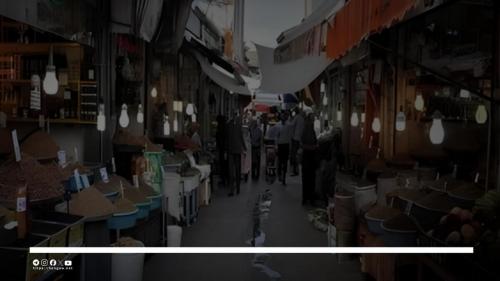
Reports received by Hengaw further show that parts of Rasht’s well-known traditional marketplace, known as the “Grand Bazaar of Rasht,” were engulfed in a large-scale fire on the night of January 8.
A well-informed source told Hengaw:
“At the beginning of the protests, the city of Rasht was under the control of the people, but that quickly changed. Large sections of Rasht’s bazaar have burned down. Several buildings caught fire. Hospitals were filled with bodies. Perhaps more than 1,500 people were killed in Rasht alone. Government forces were everywhere, effectively spraying crowds with gunfire. Nothing mattered to them except killing. Many detainees are being held on Ziabari Street, and most of them are young.”
Based on interviews with multiple independent sources, Hengaw’s verification team has determined that on January 8, 2026, coinciding with the protests in Rasht, multiple fires broke out across different parts of the city. During these incidents, some individuals prevented both protesters and emergency responders from extinguishing the flames. One informed source told Hengaw:
“The nature of the fires varied, but what they all had in common was that groups of individuals armed with machetes prevented firefighters and civilians from putting out the fires.”
Another eyewitness told Hengaw:
“Several sections of Rasht’s bazaar, including the rows of stationery shops and plastic goods vendors, along with a mosque, were completely burned down.”
The mosque referred to in this account is Hojjatieh Mosque, located in the Rudbartan neighborhood of Rasht, within the area bordered by Motahhari Boulevard, Akhavan Street, and Eskandari Street. Geographically, the mosque is situated near major landmarks, including Rasht Municipality Square, Jahangir Restaurant, Amir al-Mo’menin Hospital, the Grand Bazaar of Rasht, and the Farabi Specialized Surgical Clinic.
According to testimonies and reports received by Hengaw Organization for Human Rights, the Rasht bazaar was already on fire before the mosque was set ablaze. Multiple accounts indicate that people present in the market attempted to contain the flames, but the fire spread rapidly. Protesters trapped inside the bazaar and its narrow, interconnected alleys were forced to choose between burning in the fire or fleeing to save their lives. However, as they attempted to escape toward Shariati Street, they were met with intense gunfire.
In narratives published by the Islamic Republic of Iran through its official media outlets, efforts have been made to attribute the fires — including the blaze at the Grand Bazaar of Rasht — to protesters and local residents. This stands in stark contrast to the cultural and economic significance of the Rasht bazaar for the city’s population. Local sources and witnesses interviewed by Hengaw strongly reject such claims, emphasizing that the people of Rasht would not set fire to their own livelihoods, homes, and cultural identity.
According to multiple eyewitness accounts from Rasht, many residents believed on Thursday night that the city had come fully under the control of protesters. At the same time, however, in other parts of the city — particularly in the area surrounding the Rasht bazaar — a massive and devastating fire was underway, while government forces blocked firefighters from entering the area to contain the blaze and opened fire on people fleeing the flames.
Although Hengaw has not yet been able to independently determine an exact death toll from the events surrounding the Rasht bazaar, witnesses and local sources have confirmed the presence of piles of bodies along Shariati Street, where individuals who had escaped from the market were targeted by direct gunfire.
Hengaw Organization for Human Rights has also obtained information indicating that the cities of Lahijan, Astaneh-ye Ashrafiyeh, and Langarud were likewise subjected to intense and widespread repression by government forces during the protests.
In this regard, a well-informed source told Hengaw that government agents in Astaneh-ye Ashrafiyeh had warned residents: “We have orders to use live ammunition.” According to this source, government forces fired street by street, and after each area was “cleared,” they used flare rounds to signal to other units that the zone had been secured. Witnesses reported that the shootings were indiscriminate, ranging from the wounding of a 70-year-old woman, who was shot in the leg while taking cover behind a car, to an elderly taxi driver who was simply passing through the area.
Another informed source from Langarud told Hengaw that on Wednesday, January 6, 2026, a group of judges and prosecutors held a special closed-door session at the Langarud courthouse and the city’s Security Council meeting at the municipal building. Both locations were met with angry public protests. According to the source, government forces opened direct fire to disperse the crowd, ultimately suppressing the protests and relocating the session to the municipal building.
The same source added that due to Langarud’s urban layout, which even in 1979 made large centralized gatherings nearly impossible, only one major protest had occurred there in 2022 — resulting in numerous casualties and injuries. He continued:
“For three consecutive nights, protests unfolded along three different routes inside Langarud, leading to large numbers of wounded and detained. On another night in Chaf, government forces used live ammunition, leaving many dead. People witnessed summary executions. All the officers involved have been identified, and since that day, they have not returned to their homes out of fear.”
The source further stated:
“Across Gilan Province, it wasn’t just the internet that was shut down — telephone communications were completely cut off. Meanwhile, the presence of armed government forces and plainclothes agents in cities remains extremely heavy.”
According to the information received, a significant number of victims died after being transferred to medical centers. Government forces have also applied sustained pressure, intimidation, and systematic obstruction to prevent families from holding even the most basic burial ceremonies. Any form of gathering or mourning ritual has been actively suppressed.
During the protests in the city of Lahijan, government forces deployed armed personnel on top of the municipal building and a public school, locations which, according to eyewitnesses, may have been used by sniper units. Reports received by Hengaw indicate the simultaneous use of live ammunition and pellet gunfire, with many shots aimed at the chest and head. By the day following the protests, widespread bloodstains remained visible across sidewalks and city streets, underscoring the intensity of the violence.
Hengaw’s sources have also reported that the basement of a mosque at the end of Shishegaran Street in Lahijan — which had previously been used as a detention and torture site during the 2022 protests — was once again at risk of being repurposed by repressive forces during the recent demonstrations. However, public intervention and resistance prevented a repetition of these abuses, and the site was ultimately not brought back into use.
https://hengaw.net/en/reports-and-statistics-1/2026/01/article-7