
21 January 2026 :
January 20, 2026 - IRAN. HRANA Report on 24th day of protests: 4,519 confirmed deaths, 9,049 deaths still under investigation, 26.000 arrested
Day Twenty-Four of the Protests: Continued Communications Blackout and International Warnings of Crimes Against Humanity
On the twenty-fourth day of nationwide protests, according to aggregated data compiled by HRANA, the number of confirmed deaths has reached 4,519, while the number of deaths still under investigation stands at 9,049. At least 5,811 people have sustained serious injuries during the protests, and the total number of arrests has risen to 26,314. These figures, amid a communications blackout, security pressure on families, and restricted access to information, likely reflect only a portion of the reality on the ground.
At the same time, developments such as the release of an unprecedented statement by physicians and forensic medicine specialists regarding the alarming treatment of those injured and killed during the protests, the announcement of an emergency session of the United Nations Human Rights Council, and warnings by the body’s Special Rapporteur about the potential commission of crimes against humanity all indicate that Iran’s human rights crisis has entered a new and deeper phase.
Nationwide protests in Iran continued into their twenty-fourth day under conditions of widespread internet shutdowns and severe communication restrictions, while judicial and security pressures on media outlets, public figures, and protesting citizens intensified. On that day, the announcement of an emergency session of the United Nations Human Rights Council signaled the scale and severity of the human rights crisis in Iran.
Disruption of communications and uncertainty over the timing of restored internet access
On the twenty-fourth day of protests, widespread internet shutdowns and disruptions continued. According to data from global traffic monitoring organizations, Iran is experiencing one of the lowest levels of international internet connectivity in the world. This blackout, now entering one of the longest periods of nationwide communications disruption in recent years, has become a key tool for controlling public space, suppressing the flow of information, and limiting independent documentation of the protests.
While there have been reports of brief and extremely limited internet connections for some users, these instances appear less indicative of a sustained restoration of access and more reflective of shifts in how restrictions are being enforced. At the same time, there are indications of the government’s efforts to implement selective internet access and expand the use of a domestic network (intranet), a move that, if enforced, would further restrict citizens’ free access to the global internet and independent platforms.
Statements by government officials have added to the existing ambiguity. On the one hand, promises have been made regarding the restoration of internet access in the coming days; on the other, the head of the Digital Transformation Commission of the Iran Computer Trade Organization has stated that even if general connectivity is restored, reconnecting foreign platforms will not be possible. These positions indicate that the government’s communications policy is aimed less at returning to the previous status quo and more at managing access in a controlled manner.
The consequences of this situation extend beyond the media and information sphere. Internet shutdowns have seriously disrupted economic activities, online services, family communications, access to medical and emergency services, and the ability to track the status of detainees and the injured. According to human rights organizations, these conditions have increased the risk of enforced disappearances, pressure on families, and the concealment of the true scale of the crackdown.
Escalating Pressure on the Media: Charges Brought Against Two Publications Following the Suspension of Hammihan
As part of ongoing efforts to control the media narrative surrounding the protests, the Tehran Prosecutor’s Office announced that criminal cases have been filed against two additional media outlets. This move came just one day after the suspension of Hammihan newspaper, whose editor-in-chief stated that the ban was imposed due to the publication of reports on violations of medical privacy during the protests.
According to the prosecutor’s statement, the new cases have been opened on charges of “spreading false news” related to the nationwide protests. These actions are taking place amid internet shutdowns and widespread restrictions that have severely curtailed the ability of independent media to operate freely, effectively allowing the government’s official narrative to dominate the domestic public sphere. Observers view the simultaneous suspension of media outlets and the internet blackout as evidence of intensified information control and an effort to prevent the dissemination of on-the-ground reporting about the suppression of protests.
Statement by Physicians and Forensic Specialists: Warning of Systematic Violations of Medical and Autopsy Standards
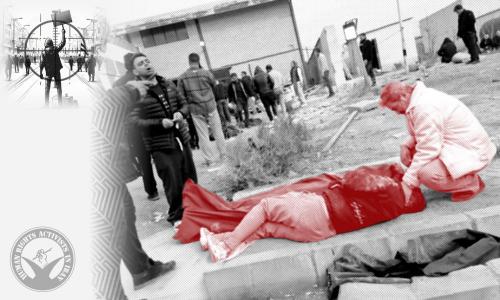
On the twenty-fourth day, a group of medical doctors, paramedics, and forensic medicine specialists released an analytical statement examining publicly available images and videos of those injured and killed during the protests. The statement points to serious and alarming patterns indicating violations of fundamental principles of medicine, forensic practice, and medical neutrality.
The report cites evidence suggesting that some of the deceased had undergone medical intervention prior to death. The presence of equipment such as angiocatheter lines, urinary catheters, breathing tubes, and cardiac monitoring devices on bodies found outside medical settings strengthens the possibility that some injured individuals died after treatment had begun or were removed from medical facilities without confirmation of death.
Other sections of the statement refer to cases in which gunshot-wounded individuals were abandoned without triage or treatment, extensive abdominal incisions carried out outside recognized forensic protocols, signs of severe physical violence, mutilation, decapitation, and the collective relocation of bodies. There are also reports of evidence consistent with exposure to toxic chemical substances and severe thermal destruction of remains, factors that severely limit the possibility of conducting independent forensic examinations.
The signatories emphasized that although the report faces methodological limitations due to the lack of direct access to bodies and medical records, the overall findings are consistent with patterns of systematic mistreatment in mass casualties and serious human rights violations, and could serve as a basis for future independent investigations.
Heightened Security Atmosphere: Widespread Presence of Forces and Mass Arrests
Field reports received from various cities across the country indicate the persistence of a heavy security atmosphere. A widespread presence of law enforcement, security forces, Basij units, and plainclothes agents has been reported in public spaces, high-traffic areas, and at city entry and exit points. Checkpoints, motorcycle patrols, and on-the-ground controls have increased noticeably. This situation becomes particularly intense after nightfall, contributing to an atmosphere of deterrence and fear in urban areas.
At the same time, large-scale arrests continue across multiple provinces. According to HRANA reports, at least dozens of citizens have been arrested in provinces including Qazvin, Fars, Razavi Khorasan, Ilam, Semnan, and Kerman. In some cases, security agencies have labeled detainees as “protest leaders” or accused them of serious charges such as killing security personnel. The release of official or semi-official arrest figures, beyond their operational function, also serves as a warning and intimidation tactic aimed at suppressing protests through social pressure.
Judicial Action Against Public Figures: Cases Filed Against Athletes, Artists, and Business Owners
The Tehran Prosecutor’s Office has announced that judicial cases have been opened against 15 athletes and actors, 10 signatories of a statement by the Iranian House of Cinema, and 60 business units for supporting the nationwide protests. According to the statement, the assets of some of these individuals have also been seized.
These measures are part of a broader pattern of judicial action against well-known figures and cultural activists and are assessed as an effort to increase the social and economic costs of supporting the protests. At the same time, the failure to disclose the names of the accused and detailed information about the cases has added to the legal ambiguity surrounding these actions.
International Reactions: Escalating Political and Diplomatic Pressure
At the international level, reactions to the suppression of protests in Iran have continued and intensified. The European Parliament, strongly condemning the use of violence against protesters and the internet shutdown, has called for accountability from Iranian authorities, with some lawmakers emphasizing the need to tighten sanctions and diplomatic restrictions.
It has also been reported that several European airlines have suspended or halted their flights to Iran, and the European Union Aviation Safety Agency has advised airlines to avoid Iranian airspace. These decisions reflect growing concerns over the country’s security situation and the political consequences of recent developments.
Emergency Session of the UN Human Rights Council and Warning of Crimes Against Humanity
The United Nations Human Rights Council has announced that it will hold a special emergency session on Friday to address the human rights situation in Iran. The stated aim of the session is to examine violence against protesters, communications shutdowns, and other serious human rights violations.
In this context, the UN Special Rapporteur on the human rights situation in Iran has stated that existing evidence, including images and videos showing direct gunfire at unarmed civilians, raises the need to examine the possible commission of crimes against humanity. She described the internet shutdown as one of the main obstacles to independent investigations and called for unrestricted access by international bodies to information and evidence.
vidence Pointing to the Military’s Role in the Crackdown
In recent days, uncertainty and speculation regarding the role of the military in the ongoing events have increased. The announcement of the identity of the first army casualty during the recent protests, along with the lack of transparent explanation regarding his mission, has raised questions about the level of the military’s involvement in confronting the protests. Although officials have not confirmed a direct role for the army in street-level repression, certain statements and field evidence have fueled these speculations.
Government Responses: Emphasis on a Security and Judicial Approach
On the twenty-fourth day of the protests, government officials’ responses became increasingly focused on controlling the narrative, managing international repercussions, and intensifying domestic judicial action. While no nationwide official casualty figures have been released, scattered remarks by some local officials have created cracks in the official narrative.
In this context, the deputy for security and law enforcement affairs of the Razavi Khorasan Governor’s Office stated that “around 400 people” had been killed in Mashhad (a remark that were first published by pro-government media and later removed). These statements were immediately followed by efforts to discredit them, with the deceased largely described as “martyrs” or as victims of “rioters.” The rapid removal of these remarks from official media outlets is seen as a sign of the authorities’ sensitivity to the publication of any uncontrolled casualty figures.
On the security front, military and law enforcement officials continue to emphasize a narrative of “confronting organized and terrorist riots.” At the same time, some official statements have attempted to deny or downplay the use of live ammunition by government forces—a position that contradicts extensive medical evidence, published videos, and field reports documenting direct gunfire against unarmed protesters.
Overall, the government’s responses on the twenty-fourth day were focused less on transparent accountability regarding casualties and the handling of protesters, and more on information control, deterrent judicial measures, and managing political and international consequences.
Updated Statistics
- Number of recorded gatherings/protests: 629
- Number of cities involved (non-duplicated): 188
- Number of provinces involved (non-duplicated): 31
- Confirmed deaths: 4,519
- Protesters: 4,251
- Minors (under 18): 33
- Government/affiliated forces (military and civilian): 197
- Non-protesters/civilians: 38
- Deaths under investigation: 9,049
- Seriously injured: 5,811
- Total arrests: 26,314
- Broadcast forced confessions: 167 cases
Note: Given the widespread internet shutdowns, the pervasive security environment, and restricted access to information, the actual figures are likely significantly higher. The data presented above is based exclusively on individually verified cases.
Summary
The twenty-fourth day of nationwide protests passed amid the continued internet blackout, intensified pressure on media outlets and public figures, and growing alarming reports regarding the treatment of the injured and the deceased. At the same time, international reactions and the convening of an emergency session of the United Nations Human Rights Council increasingly placed Iran’s human rights crisis at the center of global attention.