

16 January 2026 :
16 January 2026 - IRAN. IHR Report on 20th day of protests
Twenty days have passed since the start of a new round of anti-government protests in Iran. Despite the continued nationwide internet blackout, IHR is gradually receiving accounts of the crackdown, shedding clearer light on the scale of the systematic crackdown and killings of protesters.
IHR has obtained further details about the death of Negin Ghadimi, a 28-year-old protester from Tehran. According to a source close to the family, Negin, who had travelled with her family to Tonekabon in Mazandaran Province, was killed after Islamic Republic security forces fired live ammunition directly at her.
Based on available information, it is estimated that thousands of protesters have been killed across Iran, most of them as a result of the mass killings on 8 and 9 January. To date, IHR has documented 3,428 protester deaths, based on credible information from sources within the Islamic Republic’s health and medical system, eyewitnesses, and/or two independent sources. The organisation stresses that this figure is an absolute minimum, and that documentation efforts will continue in order to reveal the full extent of these mass killings.
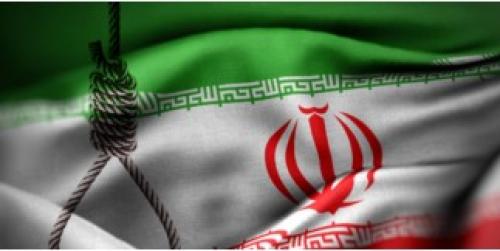
According to IHR estimates, more than 20,000 people have been arrested in connection with the protests. At the same time, the continued broadcasting of forced confessions from arrested protesters by state media serves as a precursor to the issuance and implementation of death sentences.
Meanwhile, on 14 January, in response to Fox News asking about the hangings of protesters being carried out, Iran’s Foreign Minister, Abbas Araghchi said: “I’m confident that there is no plan for hangings at all.” This comes as Mohseni Ejei, Head of Iran’s Judiciary, reiterated the following day (15 January), the need to “expedite the trial and punishment” of those arrested, claiming that “this is the demand of the people.”
IHR once again warns of the imminent sentencing and execution of protesters.
IHR Director, Mahmood Amiry-Moghaddam said: “The risk of death sentences being issued and implemented in the coming days and weeks is extremely serious, because the death penalty is the most significant tool for instilling fear and terror in society. After the mass killing of protesters, the Islamic Republic will resort to executions to prevent further protests and to contain public anger. The statements of the head of the judiciary and the airing of forced confessions on state television are clear signs that the ground is being prepared for executions.”
Referring to the foreign minister’s claim that “there is no plan for hangings at all”, he added: “The Islamic Republic’s foreign minister has no authority or role in decisions on the death penalty. His role is simply to justify the government’s crimes and to mislead international public opinion. The Islamic Republic intends to execute protesters not as protesters, but under charges such as terrorism, espionage and moharebeh (waging war against God).”
Karoline Leavitt, the White House spokesperson, also said yesterday: “The president understands today that 800 executions that were scheduled and supposed to take place yesterday were halted.”
Mahmood Amiry-Moghaddam said: “The Islamic Republic deliberately uses a figure such as 800 executions in a single day to reduce public and international sensitivity to planned executions. The international community must send a clear message to the Islamic Republic that even the execution of one protester is unacceptable, and it must act immediately to pursue the prosecution of Ali Khamenei and the forces under his command for their role in the mass killing of protesters.”
The new round of protests, which began on 28 December 2025 in Tehran’s bazaar over poor economic conditions, quickly spread to other parts of Iran, accompanied by anti-government slogans. Until the internet blackout on 8 January, protests had spread to all 31 provinces and around 190 cities and have continued sporadically in some cities since, per reports. Due to the ongoing blackout, information about recent protests has only reached the organisation through people who have recently escaped Iran, brief phone calls and limited communications via Starlink devices.
Protester Died in Father’s Arms
According to information obtained by IHR, Negin Ghadimi, 28, from Tehran, was killed on 9 January, in the city of Tonekabon (Shahsavar) in Mazandaran Province after being struck by a live round.
A source close to Negin Ghadimi’s family told IHR: “Negin was in Shahsavar with her family when, during a public gathering, security forces began firing tear gas. In the chaos that followed, her family were separated and Negin was left alone beside her father. Warning her of the danger, her father urged her to leave, but Negin replied, ‘Why should we go back? What are you afraid of?’ She took one step forward and was immediately hit by a live bullet.”
The source said the live round struck Negin on her side. Deeply affected, the source added: “With the help of locals, they carried her into a house. Her father repeatedly begged for her to be taken to hospital, but because the shooting continued, it was not possible to move her. At the moment she was hit, Negin turned to her father and said, ‘Dad, I’m burning… I’m burning.’ Negin died from severe blood loss in her father’s arms. Negin was my love. She was my little sister. Be our voice. Shout Negin’s name.”
According to the source close to the family, Negin and her relatives were simply taking part in a peaceful march in the street when this happened. The source described Negin as a biotechnology engineering graduate and a cheerful young woman who loved painting and swimming. Because of her father’s work, she had spent part of her life in different parts of Iran, including Bandar Abbas, Arak and Sari, and was ultimately killed by Islamic Republic agents by the Caspian Sea.
According to information obtained by IHR, despite the bloody suppression of protesters in Tonekabon, the city remains under an intense security clampdown. Images have been published showing a heavy presence of armed forces patrolling the city with heavy weapons.
Repressive Measures
Reports from numerous cities across Iran indicate that security and military forces maintain a heavy presence throughout urban areas, and that from dusk onwards a form of de facto martial law is imposed.
An eyewitness who has recently managed to leave Iran told IHR that the security atmosphere in Tehran and Karaj is extremely severe, with military forces highly visible across the streets.
The source said: “Tehran and Karaj feel like ghost towns, quiet and deserted. People are deeply angry, and their hope is that foreign assistance will arrive. Military forces are stationed at the entrances to streets and in alleyways, carrying live weapons, mainly Winchester rifles, shotguns and AK47s. The cities have effectively been placed under martial law. Many shops are closed.”
Speaking about raids by security forces on people’s homes to seize Starlink devices, the source added: “They raided the home of one of my relatives in Tehran to confiscate a Starlink unit. These night-time attacks, sudden and carried out like assaults, are reported more often in parts of Tehran such as Punak, Narmak and Haft-Hoz, likely because more videos from these areas have been sent out of the country. To find Starlink equipment they search the entire house, swearing and completely ransacking belongings.”
In Iran’s Kurdish-majority regions, the source said, the widespread internet shutdown has been accompanied by an even more heavily militarised security environment. Patrols by security forces continue throughout the cities, while access to text messaging and phone calls is severely restricted and tightly controlled.
Internet Blackout
The nationwide internet blackout in Iran has now continued for more than a week. This comes as, according to some reports, Fatemeh Mohajerani, spokesperson for the Islamic Republic, has stated that “international internet access will not be available to users at least until before Norouz (March 2026).”
Since the start of this digital blackout, only a limited number of citizens have been able to access the internet through Starlink devices. At the same time, numerous reports have emerged of government forces raiding people’s homes to confiscate satellite dishes and Starlink receivers, as well as attempts to jam signals and employ other methods to disrupt Starlink transmission systems.
Death Toll
According to data gathered by IHR, at least 3,428 protesters have been killed since the start of the protests. It should be noted that the number only includes cases verified directly by IHR or through two independent sources and includes the data received from sources within the Ministry of Health for 8 until 12 January.
Reports indicate that most of those killed were under 30 years old, and at least 17 were under 18, though IHR is still working to obtain documentation confirming the exact ages of all victims. At least ten of the victims were women.
Unverified estimates ranging from 5,000 to 20,000 deaths have been reported. Owing to the complete internet shutdown and severe restrictions on access to information, independent verification of these figures is currently extremely difficult. IHR is also still working to verify reports of killings from the early days of the protests.
Presence of Foreign Paramilitary Forces
Numerous reports suggest that, during the nationwide protests, the Islamic Republic has increasingly drawn on foreign paramilitary forces, mainly Iraq’s Popular Mobilisation Forces (Hashd al-Shaabi), to bolster its domestic machinery of repression. CNN, citing Western intelligence sources, has estimated their number at around 5,000.
Separately, an informed source has reported that around 50 buses entered Iran from Iraq via the Haji Omran border crossing, reportedly under the guise of a “pilgrimage convoy”. Based on information gathered through interviews with several eyewitnesses, IHR has also confirmed the presence, during the crackdown on anti-government protests, of forces speaking Arabic.
https://iranhr.net/en/articles/8531/