
19 January 2026 :
January 17, 2026 - IRAN. IHR Report on 21st day of protests: 3,428 protesters killed
It is estimated that thousands of protesters have been killed on 8 and 9 January.
Twenty-one days have passed since the start of a new wave of anti-government protests in Iran. Despite the continued nationwide internet blackout, IHR is gradually receiving accounts of the crackdown, shedding clearer light on the scale of the systematic crackdown and killings of protesters.
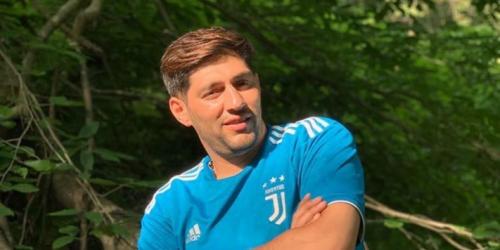
According to information obtained by IHR, Reza Eskandarpour, a 37-year-old protester from Tehran, was killed by direct gunfire from the Islamic Republic forces during the protests in Tehran’s Sadeghieh district on 8 January.
A source close to Reza’s family told IHR: “On 8 January, Reza, who ran a cabinet-making workshop, came home. He told his mother, ‘Mother, I am going to the streets, and if I don’t return, tell the whole world that I gave my life for the freedom of Iran.’ He gave his car keys to her and asked his family for forgiveness. He prayed despite not being religious, and his mother and sister, in tears, passed him under the Quran as he left.”
The source added that Reza attended the protest in Sadeghieh together with five of his friends, one of whom was shot and injured. The source continued: “Reza tried to help save his friend, because he had heard that groups of plain-clothed agents were approaching the wounded and finishing them off with final shots. Suddenly, shots were fired at Reza from the top of one of the surrounding buildings. One bullet entered his heart from behind. Two bullets hit his abdomen, two struck his legs, and one hit his neck. In total, six bullets. His throat was torn open and there was blood everywhere.”
Reza’s body was transferred to the Kahrizak branch of the Iranian Legal Medicine Organisation. “Family members went to Kahrizak to find out what had happened to Reza. Bodies were piled on top of bodies. Hundreds of them. They only allowed one person from each family to enter. Large crowds had gathered to search for their loved ones. They were told to look at a screen displaying photographs and numbers of the deceased in order to identify them,” the source added.
IHR had previously confirmed, through several sources close to the families of victims, the presence of hundreds of bodies at Kahrizak. Footage shared online and aired by state media further corroborates these reports.
“On 11 January, Reza’s body was transferred from Kahrizak to Behesht Zahra cemetery in Tehran. Around 5,000 bodies were there. Grieving families were chanting anti-government slogans. Reza’s family took photos during the burial ceremony, but security agents attacked them, seized their phones, deleted the photos and threatened them with arrest,” the source said.
Reza Eskandarpour is described as a young man who loved travelling and sports and who was planning to start a family. In his final Instagram post, he wrote: “By the time life reached us, it was cut off, banned, censored, cancelled, made expensive, turned into war, turned into killing. What a tragic ending…”
Based on available information, it is estimated that thousands of protesters have been killed across Iran, most of them as a result of the mass killings on 8 and 9 January. To date, IHR has documented 3,428 protester deaths, based on credible information from sources within the Islamic Republic’s health and medical system, eyewitnesses, and/or two independent sources. The organisation stresses that this figure is an absolute minimum, and that documentation efforts will continue in order to reveal the full extent of these mass killings.
https://iranhr.net/en/articles/8533/