
30 January 2026 :
January 29, 2026 - IRAN. IHR Report on 33rd day of protests: Arrests, Incommunicado Detention and Unknown Fate of Disappeared
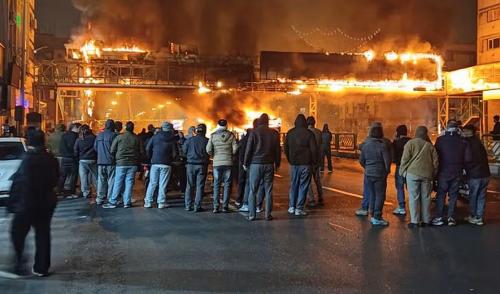
Weeks after the violent crackdown on nationwide protests which resulted in thousands of people being killed, injured or detained, Iran remains under internet restrictions and a heavy security presence in major cities. There is serious concern regarding the condition of thousands of protesters who are incommunicado following arrest or have been reported missing.
Detained protesters have been denied access to their lawyers of their choice, with many held in undisclosed locations
While state media have confirmed the arrests of 3,000 protesters, IHR estimates that at least 40,000 people, including minors, have been detained in relation to the nationwide protests. These arrests reportedly took place during street protests, following identification and raids on people’s homes or at checkpoints.
Arrests
Eyewitnesses in several Iranian cities report the establishment of checkpoints and door-to-door searches to arrest protesters. Informed sources, including a journalist inside Iran, told IHR that “at checkpoints, officers force young people to strip; if signs of injury from pellet guns or live ammunition are found on their bodies, they are arrested.”
In recent days, several lawyers including Mehdi Ansari, Mohammad Hadi Jafarpour, Enayatollah Karamati and Shima Ghosheh have been arrested in different cities.
IHR has also received reports of security forces raiding certain medical facilities and informal shelters for the wounded in order to arrest medical staff and volunteer first responders; matters that will be addressed in forthcoming reports.
Furthermore, many of the detainees also remain incommunicado. Many families remain unaware of the fate of their detained relatives, as security agencies refuse to provide any information about detainees’ whereabouts, legal status or health.
The sheer number of detainees, combined with restricted internet access, has severely hampered the flow of information. Nevertheless, relatives or acquaintances of some detainees—from both large and small cities, and from varied social and age groups—have contacted Iran Human Rights. Among them are:
Amirhossein Ansari, a repairman, arrested during protests in Tehran. No information has been released about his condition or whereabouts. He has had no contact with his family, and his ailing mother remains in the dark about his fate.
Ebrahim Hassanzadeh, detained in Shiraz after being shot in the leg. His family has no information about his medical condition or place of detention.
Omid Ravand, a kung-fu coach in Marivan, whose situation remains unknown following his arrest and beating by security forces.
Iman Hosseini, 17, arrested in Sirjan; no information is available regarding his detention or the charges against him.
Mahya Galeh-Dari, arrested around two weeks ago during anti-government demonstrations in Tehran; no news has emerged about her condition.
This lack of information persists amid reports that groups of detainees have been transferred to unofficial, secret detention sites, including warehouses and other facilities operating without oversight. IHR previously documented the use of unofficial premises during the “Woman, Life, Freedom” nationwide protests.
Denial of access to lawyers
Relatives of a number of detainees have informed IHR that, beyond the judiciary’s refusal to respond about their loved ones’ cases, defendants are also being denied access to lawyers of their choice.
A lawyer in Tehran told IHR: “Only detainees whom judicial officials consider to be facing ‘lighter charges’ are permitted contact with their families. The Greater Tehran Penitentiary is one of the prisons used for such charges. Those accused of ‘heavier charges’ are denied all contact; even their place of detention is unknown. They have no access to lawyers, are subjected to torture and are at serious risk of secret executions.”
Article 48 of Iran’s Code of Criminal Procedure grants suspects the right to request a lawyer of their choice in the pre-trial phase. However, a Note added to the Article in 2015, limits this right for those accused of “crimes against internal or external security” during the preliminary phase. As the majority of protesters are facing security-related charges, they will be denied access to their lawyers during the pre-trial phase.
Missing Protesters
IHR has been contacted by families seeking help in tracing relatives who left home to join protests and never returned. According to them, inquiries with the authorities yielded nothing: their relatives were found neither among the injured in hospitals nor among bodies transferred to forensic institutes; nor was there any record of arrest or detention.
One report received by IHR concerns the family of Maryam Farrokhi-Mehr, a Tehran resident who travelled to Mehrshahr, Karaj, to take part in the protests on 8 January and has not been heard from since. Despite all efforts, her family has been unable to find any information about her fate.
There are many reports of missing protesters being shared online. Yet, at present it is impossible to obtain even an approximate figure for the number of missing protesters.
Meanwhile, fresh reports of unidentified bodies and mass graves have sharply intensified fears about the fate of detainees and extrajudicial killings in custody. Eyewitnesses told IHR that large numbers of unidentified bodies were transported in refrigerated vehicles, including ice cream trucks, for mass burial in cemeteries.
Moreover, images and videos broadcast on state television and circulated on social media from facilities holding the bodies of those killed- including the Kahrizak branch of the Iranian Legal Medicine Organisation- clearly show that some corpses bore gunshot wounds to the head while also displaying signs of hospitalisation, such as hospital clothing or wristbands, and in some cases medical equipment for monitoring vital signs or breathing tubes still attached.
Social media has also highlighted cases in which, days after a person’s arrest or disappearance, their lifeless body was found in a forensic facility, sometimes bearing signs of torture. IHR has been unable to independently verify these reports.
https://iranhr.net/en/articles/8576/