
19 February 2026 :
February 19, 2026 - IRAN. Massive 40th-Day Gatherings Across Iran Challenge the Regime
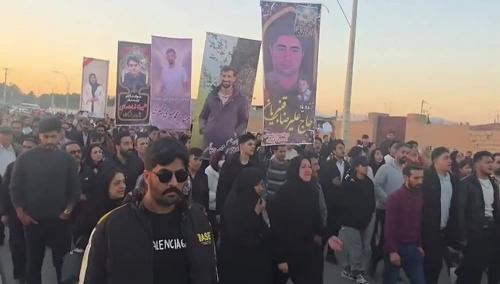
The Iranian landscape has been transformed into a scene of defiance as the nation marks the 40th-day memorials for those fallen in the January uprising. From the spirited gatherings at Tehran University and Ferdowsi University in Mashhad to the fierce nightly vigils in Najafabad, the atmosphere is one of unyielding mourning turned into mobilization. In Najafabad, despite a stifling security presence, the ceremonies for several martyrs of the uprising turned into a massive gathering that lasted until the late hours of the night. Chanting that “tanks and machine guns no longer have any effect,” the crowds signaled a profound psychological break from the regime’s machinery of fear, proving that the memory of the martyrs has become the fuel for an irreversible revolution.
This wave of grief is underpinned by a new and terrifying clarity regarding the methods of the state’s crackdown. Information surfacing from within the regime’s own forensic and burial services has confirmed the systematic use of “finishing shots” (coup de grâce) against wounded protesters. Javad Tajik, the CEO of Tehran’s Behesht-e Zahra cemetery, recently admitted that at least 70 percent of the bodies brought to the facility had been killed by such shots. While he attempted to shift the blame to “terrorists,” the testimonies of families and medical staff tell a more organized horror. Protesters like Sam Afshari and 13-year-old Abolfazl Vahidi were reportedly abducted from hospital beds by security forces, only to be found days later in morgues with secondary, fatal bullet wounds to the head.
The medical community has been a primary target of this campaign to hide the truth. Security forces reportedly raided facilities like Sina Hospital in Tehran and clinics in Ilam to seize the injured, even resorting to the use of tear gas inside hospital corridors. Those who survived the initial clashes were often met with fatal violence within the very walls intended for their recovery. Despite official denials of charging “bullet money” for the return of bodies, hundreds of families have come forward with evidence of such extortion. This brutal strategy has only served to galvanize the public, turning the 40th-day ceremonies into a national referendum on the clerical regime’s right to exist.
A Generation Lost to the Barricades
The internal panic of the ruling elite is no longer confined to private meetings; it is spilling into public addresses and state-run media. The spokesperson for the Majlis Education and Research Committee recently issued a startling admission, revealing that the January uprising was fundamentally driven by the youth. National statistics show that an average of 17 percent of participants were teenagers, but in several provinces, this figure reached a staggering 45 percent of the population under 20. The official expressed serious concern over why entire classrooms of students chose to enter the “dangerous arena” of protest, effectively admitting that the regime has lost its ideological grip on the next generation.
This loss of control is echoed by the regime’s highest officials, who now speak with the desperation of men presiding over a terminal crisis. During a high-profile ceremony in Mashhad, the cleric Naser Rafiee voiced a nightmare that haunts the security apparatus: the fear of military armories being seized by the people. He openly questioned what would happen if the public were to storm a military center and take a thousand rifles, a scenario that suggests the state no longer feels its own walls are secure. President Pezeshkian has also adopted this language of collapse, describing the nation as “deeply wounded” and confessing that the “heart of the system” is beating on such a precarious edge that even the slightest additional pressure could cause a total rupture.
The economic reality facing the Iranian people adds a layer of explosive frustration to this political instability. State media now speaks of an “Iftar of the poor,” noting that as Ramadan has started, the cost of a simple meal for a family of four has exceeded 1,069,000 tomans. With the price of dates reaching as high as 800,000 tomans per kilo and tea prices soaring, basic survival is becoming a luxury. Coupled with the Budget Office’s admission of a 101-year backlog in infrastructure projects—a figure Hamid Pourmohammadi described as a “bitter reality”—the image presented to the public is one of a bankrupt system that has sacrificed the nation’s future for its own survival.
Blinding the Surveillance State
As the internet blackout that shrouded the height of the January uprising begins to lift, more detailed and harrowing reports are surfacing from the peak of the revolt on January 8 and 9. These days represented a tactical escalation in the conflict, characterized by coordinated strikes against the regime’s infrastructure of identification. In the Vakilabad and Haft-e Tir districts of Mashhad, Resistance Units successfully blinded the security forces by methodically destroying and torching the high-tech surveillance cameras used for facial recognition. This was a deliberate effort to create “safe zones” for the movement, allowing the uprising to expand without the immediate threat of state monitoring.
The street battles of January 8 and 9 also revealed a level of organization that has shaken the confidence of the regime’s “Special Units.” In Fouladshahr, young protesters engaged in sustained, hand-to-hand combat with security forces, using Molotov cocktails and stone barricades to ground the machine of repression to a halt. Reports from the ground describe scenes where elite units were forced to retreat under a barrage of fire and stones, as the protesters demonstrated a sophisticated understanding of urban warfare. These accounts highlight a population that is no longer just reacting to oppression but is actively seeking to dismantle the tools used to enforce it.
The emerging picture of these critical days suggests that the January uprising was not a fleeting moment of anger but a calculated challenge to the regime’s authority. The combination of tactical ingenuity in cities like Mashhad and the raw courage seen in Fouladshahr has created a new blueprint for resistance. As more information leaks out from under the state’s censorship, it becomes clear that the events of January 8 and 9 were a dress rehearsal for a much larger confrontation. The Iranian people have moved beyond the point of return, and the regime, by its own admission, is struggling to find a way to heal the deep and widening wounds of a society in revolt.