
23 January 2026 :
January 23, 2026 - IRAN. Special session of the United Nations Human Rights Council
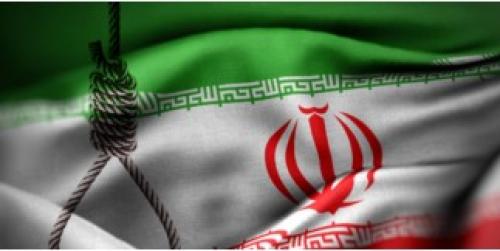
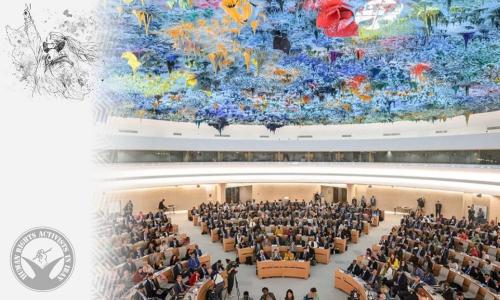
A special session of the United Nations Human Rights Council was held on January 23, 2026 at the UN’s European headquarters in Geneva. The session was specifically dedicated to examining the human rights situation in the Islamic Republic of Iran and the widespread suppression of the nationwide January protests. During the meeting, a proposed resolution was adopted with 25 votes in favor. With the adoption of this resolution, the mandate of the UN Special Rapporteur on the human rights situation in Iran was extended for one year, and the mandate of the UN fact-finding mission on Iran was extended for two years. This session marked the third special session of the Human Rights Council on Iran in the past three years and was convened at the request of civil society organizations and with the support of 23 member states of the Council.
According to HRANA, at the outset of the session, senior UN human rights officials, referring to the scope of the recent protests and the Iranian government’s response, expressed deep concern over the “unprecedented scale” of the violent crackdown on peaceful protesters. In statements and speeches delivered during the session, numerous reports of extrajudicial killings, the lethal and disproportionate use of force, mass arrests, and nationwide internet shutdowns were highlighted as serious examples of human rights violations.
Special Rapporteur: Iranian authorities’ language justifies violence
Mai Sato, the UN Special Rapporteur on the situation of human rights in Iran, warned in her remarks that the use of terms such as “terrorist,” “rioter,” and “mercenary” by Iranian authorities to describe peaceful protesters effectively serves to justify violent crackdowns and to disregard the popular and nationwide nature of these protests. She emphasized that the use of lethal force must only ever be a last resort to protect life and must comply with the principles of necessity, proportionality, and legality, principles which, she said, were widely violated during the January crackdown.
Sato further stated that even the issuance of death sentences against protesters, regardless of whether they are carried out, constitutes an unlawful act aimed at intimidating and silencing dissent, and represents a clear violation of the rights to life, freedom of expression, and freedom of assembly.
“Deadliest crackdown” from the perspective of the Fact-Finding Mission
Sara Hossain, Chair of the Independent International Fact-Finding Mission on Iran, said in a video message to the Geneva session that what has occurred in Iran in recent weeks was most likely “the deadliest crackdown against the Iranian people since the 1979 revolution.” She reported that testimonies and evidence have been collected regarding the disproportionate use of force, arbitrary killings, torture, sexual violence, mass arrests, and forced confessions, stressing that the mission’s investigations are ongoing.
In the same context, Payam Akhavan, former prosecutor of the UN war crimes tribunals, described recent events as “unprecedented bloodshed.” He spoke of cases in which families were reportedly forced to pay money to receive the bodies of victims, and even reports of individuals being found alive among the corpses.
Positions of countries: from explicit condemnation to calls against politicization
During the session, representatives of various countries presented differing views. European countries, including France, Estonia, Albania, and Bulgaria, condemned the use of lethal weapons, mass arrests, and the killing of protesters, including children, and called for the adoption of the resolution, accountability for perpetrators of human rights violations, and the extension of the fact-finding mission’s mandate. The representative of the European Union also expressed solidarity with the Iranian people and emphasized the need to end the violence and lift internet shutdowns.
By contrast, some countries, including Egypt and Iraq, called for avoiding the “politicization” of the Human Rights Council and emphasized dialogue between governments. Pakistan’s representative, while expressing concern over developments in Iran, warned that sanctions could worsen the human rights situation and said that the “chance for diplomacy” should not be lost.
Response of the Islamic Republic of Iran
In his remarks, the Permanent Representative of the Islamic Republic of Iran in Geneva described the January protests as having “entered a second phase of organized violence” and claimed that a large portion of those killed were victims of “terrorist acts.” He rejected the figures presented by international bodies and accused the organizers of the session of ignoring the human rights of the Iranian people.
Final resolution: condemnation, demands, and extension of mandates
At the conclusion of the session, the United Nations Human Rights Council, with 25 votes in favor, condemned the human rights situation in the Islamic Republic of Iran and called on the Iranian government to take all necessary measures to stop and prevent extrajudicial killings, arbitrary deprivation of life, enforced disappearances, torture, sexual violence, and arbitrary arrests, particularly against peaceful protesters. The Council also called for the immediate and full restoration of internet access across the country.
At the same time, by a majority vote of its members, the mandate of the UN Special Rapporteur on the human rights situation in Iran was extended for one year, and the mandate of the Independent International Fact-Finding Mission on Iran, given the crackdown on the January protests, was extended for a further two years. Many human rights organizations have viewed this decision as a key step toward documenting violations and pursuing accountability for perpetrators in the future.
The Geneva session concluded amid remarks by multiple speakers noting that many families of victims and of those killed or detained during the protests in Iran are closely watching for concrete outcomes from these decisions and the continued work of international human rights mechanisms.
Letter from the Human Rights Activists to the Human Rights Council on the twenty-sixth day of the protests
Earlier, on the twenty-sixth day of the nationwide protests, the Human Rights Activists in Iran published a letter addressed to the UN Human Rights Council, seeking to draw the attention of member states to the “documented and alarming patterns of repression” in Iran. The letter was released ahead of the Council’s special session on Iran and aimed to provide concise, documented, and up-to-date information to inform the Council’s decision-making.
The Human Rights Activists emphasized that their findings were based on verified HRANA reports and documentation of individual cases, noting that the figures presented represent absolute minimums. They warned that widespread internet shutdowns and severe restrictions on the free flow of information mean the true scale of the crackdown and the number of victims are likely far greater than what current data reflect.
The central focus of the letter was the widespread use of lethal force against unarmed protesters. It cited direct shootings of protesters, deaths of citizens in the streets, and the transfer of the injured to medical centers, describing this pattern as a serious and systematic violation of the right to life. At the same time, it warned about mass arrests and the unknown fate of thousands of detainees.
The letter also addressed the issue of forced confessions, describing their broadcast by state media as a violation of fair trial standards and human dignity. Such practices, it stated, not only place additional psychological pressure on detainees but also serve as a tool to legitimize repression.
Finally, the Human Rights Activists in Iran stressed the necessity of continuing independent investigations and ensuring international accountability, calling on member states of the Human Rights Council to respond effectively to the human rights situation in Iran on the basis of existing documentation and to prevent impunity for perpetrators of these violations.