
03 June 2026 :
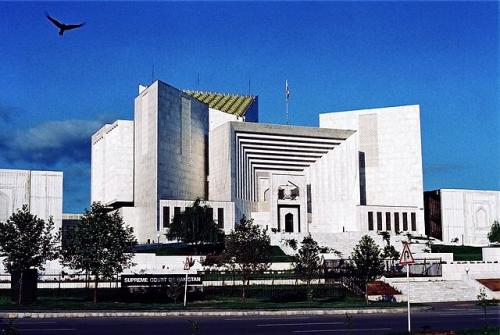
The Supreme Court has upheld a sentence awarded to a child rapist and a murderer, ruling that individuals who voluntarily become intoxicated cannot claim exemption from criminal liability, e-paper Dawn reported on June 3, 2026.
“Intoxication caused by one’s own negligence or recklessness does not excuse the offence,” affirmed Justice Muhammad Hashim Khan Kakar in a three-page verdict he authored.
The court ruling has put to rest the defence advanced by appellant Sunni Masih, who during the trial had taken a specific plea recorded under Section 164 CrPC that he committed the offence under intoxication.
Earlier, the SC had entertained the plea to determine whether a person could be awarded capital punishment if he commits a crime under intoxication.
A three-judge SC bench, headed by Justice Kakar and also comprising Justice Salahuddin Panhwar and Justice Ishtiaq Ibrahim, had taken up an appeal of Sunni Masih against a Feb 28, 2018, order of the Balochistan High Court regarding confirmation of capital punishment for brutally killing a five-year-old girl, Angel Kumari, in Sibi (Balochistan).
Sunni Masih was booked at the Police Station City, Sibi, for raping and killing the girl in January 2014. He was sentenced to death by the trial court under sections 302(b) (murder), 364-A (kidnapping), and 376 (rape) of the Pakistan Penal Code. His appeal was subsequently rejected by the BHC’s Sibi bench, prompting the present appeal to the SC.
At the hearing before the apex court, the appellant’s counsel did not challenge the merits of the conviction, but sought reduction of the death sentence to life imprisonment, arguing that the case rested solely on the appellant’s judicial confession that the offence had been committed under the influence of intoxication.
Justice Kakar noted that the perusal of the record showed that the child was killed after being raped in a cruel manner and after a detailed assessment of the evidence available on record, both the courts below had concurred in their conclusion regarding the guilt of the appellant having been established beyond reasonable doubt. “Upon our own independent evaluation of the evidence we have not been able to take any legitimate exception to the conclusions concurrently reached by the courts below,” he observed.
“A man who gets drunk voluntarily has no right to claim exemption from criminal liability,” he remarked.
While dismissing the appeal, the SC unanimously held that the impugned judgement was free from any illegality or infirmity, besides there was no misreading or non-reading of evidence. Therefore, the high court judgement did not require any interference by the SC.