
07 April 2026 :
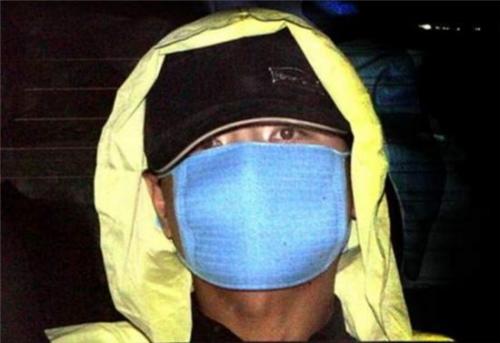
Lee U-cheol, a 'long-unexecuted death-row inmate' who killed a member trying to defect and the member's partner, died of illness while serving his sentence.
According to the Ministry of Justice on April 7, 2026, death-row inmate Lee U-cheol died last month at Gwangju Prison while battling cancer.
Lee U-cheol was serving time on charges of murdering a fellow member surnamed Lim, then 30, and secretly burying the body in a wooded hill near a highway rest area in Anseong, Gyeonggi Province, in 1994, when he was active as a member of the 'Anyang AP faction.'
When Lim, who had taken part in 'contracted violence,' tried to leave the organization, he killed Lim with two other members.
Lee U-cheol did not stop there and killed Lim's partner at the same location and secretly buried the body. He also killed an acquaintance of the victim to prevent a report to the police.
Lee U-cheol was indicted on charges including murder and concealment of a corpse and received a final death sentence from the Supreme Court in 1996.
With his death, the total number of confirmed death row inmates in South Korea has fallen to 56, comprising 52 in civilian prisons and four in a military prison. All are male convicted murderers.
Since no executions have been carried out since Dec. 1997, Korea is classified as a 'de facto abolitionist' country.
The longest-serving death row inmate in South Korea is Won Eon-sik. He is the perpetrator of the 1992 Wonju Kingdom Hall arson attack, in which he set fire to a religious facility in Wonju, Gangwon Province, killing 15 people and seriously injuring 25 others. His death sentence was finalized in 1993, and he has now been imprisoned for 33 years. Won is classified not as a serial killer but as a "mass murderer" because he killed a large number of people in a short period of time.
Other notorious serial killers who terrorized the nation also remain behind bars. Yoo Young-chul was sentenced to death in 2005 for murdering 20 people — including wealthy elderly individuals and outcall massage workers — between 2003 and 2004. Kang Ho-sun received a death sentence in 2009 for abducting and killing 10 women in the southwestern Gyeonggi Province area between 2006 and 2008. Jeong Du-yeong was sentenced to death in 2001 for breaking into affluent homes across Busan and South Gyeongsang Province after meticulous reconnaissance and killing nine people in a serial murder spree from 1999 to 2000.