
10 February 2026 :
A former senior judge of Afghanistan’s Supreme Court has sharply criticised the Taliban’s newly issued penal code, saying it contradicts core principles of Islamic law and risks turning Afghanistan into an object of criticism and ridicule across the Muslim world.
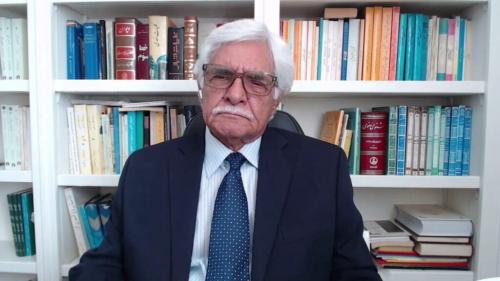
Bahauddin Baha, a former member and deputy head of the Supreme Court, said the code grants Taliban authorities powers that, under Islamic jurisprudence, belong only to God, including the authority to declare what is lawful or forbidden.
“The issuance of such rules will make the entire Islamic world question Afghanistan,” Baha said in an interview with Amu TV. “People will ask what kind of Islamic country allows such provisions without clear grounding in the Quran or the Prophet’s teachings.”
Baha has worked in Afghanistan’s judicial system since the early 1960s, serving in roles ranging from head of judicial fatwas to senior leadership at the Supreme Court. He holds the rank of qazawatpoh, one of the highest judicial grades in the country.
Under the Taliban penal code, endorsed by Taliban leader Hibatullah Akhundzada, judges may apply different punishments depending on a person’s social or religious status, a feature Baha said violates both Islamic principles and basic notions of justice.
“If a religious scholar kills someone and a judge merely says it was wrong, but an ordinary person commits the same act and faces execution or decades in prison, there is no justification for such disparity,” he said.
One of the most controversial aspects of the code, critics say, is its repeated use of terms such as “slave” and “servant”. Baha said the language was deeply troubling and incompatible with Islamic teachings.
“In Islam, slavery has been abolished in substance, even if not explicitly stated in one verse,” he said. “The Quran, through its broader principles, eliminated slavery entirely. Using such terminology today is deeply disturbing.”
The Taliban penal code consists of a preamble, three sections, 10 chapters and 119 articles. Rights groups say it institutionalises discrimination, imposes harsh punishments on ordinary citizens and grants broad immunity to those aligned with Taliban authority.
Human rights organisations have warned that the code revives forms of social stratification and opens the door to arbitrary punishment, while silencing dissent. Critics say the document disproportionately affects women and marginalised groups.
The Taliban have not addressed the substance of the criticism but have warned that those who oppose or publicly criticise the code could face legal prosecution.
The backlash adds to growing international scrutiny of the Taliban’s legal framework since they returned to power in 2021, amid concerns over restrictions on women’s rights, freedom of expression and access to justice.
Rights groups say the penal code represents a further consolidation of unchecked authority and undermines both Islamic legal traditions and internationally recognised legal standards.