
24 December 2025 :
December 23, 2025 - DRC. In defence of Joseph Kabila
A friend of Hand off Cain, Dominique Gaillard, born in Congo and naturalised Italian, sends us a “memorandum” on the plight of human rights in Congo, and an impassioned defence of a political leader sentenced to death, Joseph Kabila.
For lovers of good reading, Congo is “Heart of Darkness” and Kurtz, (which the Americans will later re-set in Cambodia with “Apocalypse now”, where Kurtz is made a colonel). For boxing lovers, Congo (which for a period of its existence was called Zaire) is Kinshasa, where in 1974 the most famous bout in boxing history took place, the “Rumble in the Jungle” in which the two black heavyweight champions, Cassius Clay/Muhammad Ali and George Foreman, challenged each other. For those who know the history of European colonialism in Africa, the Congo had the misfortune to have had to endure the game of Belgium, the most obtuse in living memory, where the king (Leopold) considered the colony his personal possession, and pocketed all the proceeds, leaving nothing in return, neither schools, nor hospitals, nor institutions that knew how to go beyond simple and brutal “robbery”.
What is happening for Hands off Cain in Congo is what we are reporting about Tanzania with Tundu Lissu: also in Congo, as in Tanzania, the opposition leader is accused of high treason, and threatened with a death sentence.
Accusing those who disagree with the government of “treason” is a strong sign of involution in nations like Tanzania and Congo, which had achieved good standards of democracy in the past.
In this article, the young, but not naive, Gaillard argues that the West should pay more attention to the vicissitudes of Joseph Kabila, a man who for almost 20 years was Congo's esteemed president, and today instead lives in hiding in exile because a death sentence handed down by a military court in September 2025 hangs over his head.
Given the complexity of the situation, I have added notes. (Valerio Fioravanti)
23 December 2025
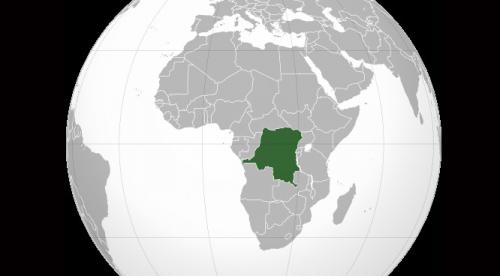
The Democratic Republic of Congo* is today experiencing an unprecedented institutional, political and security crisis, which calls into question not only the legitimacy of power, but the very existence of the state as a guarantor of sovereignty, security and fundamental freedoms. The 2023 elections, marked by generalised chaos, constitutional violations, serious technical dysfunctions and documented allegations of fraud, have definitively shattered citizens' trust in institutions. The electoral process, instead of consolidating democracy, accelerated the delegitimisation of the state and aggravated an already deep rift between the political class and the Congolese people.
Since December 2020**, the country has entered a phase of authoritarian drift: political persecution, repression of civil society, closure of spaces of freedom, instrumental use of justice and militarisation of dissent. The bloody repression of peaceful demonstrators is a dramatic and symbolic watershed of this involution. At the same time, the state's inability to guarantee security has favoured the rise of the AFC-M23*** and the loss of strategic cities such as Goma and Bukavu, marking a collapse of state authority and a historical defeat both territorially and symbolically.
In this context of chaos, repression and institutional bewilderment, the figure of Joseph Kabila*** emerges not as nostalgia for the past, but as a historical, political and moral reference for understanding what it means to govern a fragile state without destroying its foundations. Defending and protecting Joseph Kabila means defending a national heritage rooted in the history of Congo's liberation, independence and reconstruction.
Son of Laurent-Désiré Kabila, the man who ended 32 years of Mobutu's dictatorship and who never forgave the betrayal that culminated in the assassination of Patrice Lumumba, Joseph Kabila grew up between exile and resistance.
To complete the human and political portrait of Joseph Kabila, one of his phrases, pronounced in front of the notables of Katanga, remains emblematic: ‘Dans la vie, assez souvent, il faut parler seulement quand on a des mots qui sont plus forts que le silence.’ Which, translated, means ‘In life, very often, one must speak only when one has words that are stronger than silence.’
This phrase sums up the nature of a man forged by resistance, sacrifice and a sense of the state, far removed from the politics of spectacle and the rhetoric of hatred, and deeply attached to the values of responsibility and institutional dignity.
When in 2001, at only 29 years of age, he suddenly found himself at the head of the country, he inherited a fragmented Congo, occupied by armed groups, without a national army, without unity and without a state. It was during this crucial period, between 2001 and 2006, that Joseph Kabila demonstrated a rare political wisdom: he chose the path of dialogue, inclusive agreements and national reconciliation, rather than that of revenge or repression. He managed the numerous rebellions with balance, restarted the process of territorial reunification and accompanied the country towards the 2006 Constitution, which marked the birth of the Third Republic.
This path culminated in the first truly national and pluralist elections in the history of the Democratic Republic of Congo, a historic event that restored institutional dignity to the country and reintegrated it into the international community. Under his presidency, the State is gradually rebuilt, the Armed Forces reorganised and Congo chooses a balanced foreign policy favouring multilateral cooperation without renouncing its sovereignty.
The Congo left by Joseph Kabila in 2018 was not a paradise, but it was a functioning state with recognisable institutions, a structured army and a territory largely under government control. Above all, it was a country where the constitution was respected, as evidenced by the peaceful handover of power after two presidential terms, a rare gesture in the African context.
Today in Congo, Joseph Kabila's name is unpronounceable. Anyone who is close to him now, or has been close to him in the past, lives in fear. The fact that a former president who respected the Constitution is forced into exile is the clearest sign of the democratic regression taking place. A country that persecutes its political memory and criminalises pluralism is a country that has lost its reference points.
Protecting Joseph Kabila therefore means protecting values that are trampled underfoot today: respect for institutions, the culture of dialogue, the centrality of the state, territorial integrity and national sovereignty. In a Congo where foreign mercenaries are resorted to while the national army is humiliated, where justice is an instrument of repression and single-mindedness stifles all dissent, the figure of Joseph Kabila remains that of a silent leader, perhaps imperfect, but guided by strong ideals and a profound sense of the State.
The current crisis in the Democratic Republic of Congo is not just a crisis of power: it is a crisis of memory, values and vision. And this is why Joseph Kabila, for what he represents historically and symbolically, continues to be a fundamental asset to defend for those who still believe in a sovereign, united and truly democratic Congo.
Joseph Kabila Kabange, son of Laurent Désiré Kabila and Sifa Mahanya*** is ‘l'homme qu'il faut à la place qu'il faut’ for the Democratic Republic of Congo.
Dominique Gaillard