
13 December 2025 :
December 9, 2025 - IRAN. Goli Koohkan has been saved
Thanks to an international fundraising campaign
A young Iranian woman sentenced to death for killing her husband has been granted a ‘pardon’ by the victim's family.
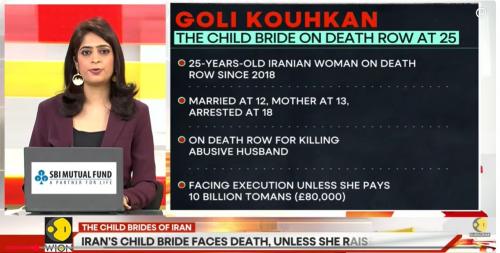
Goli Koohkan (Goli Kouhkan), a 25-year-old woman of Baluchi ethnicity, has spent the last seven years in Amirabad prison in Gorgan awaiting execution.
Her case was highlighted by HoC on 3 November (see).
According to the judiciary’s Mizan News Agency, the plaintiffs in the case of Goli Kouhkan, have agreed to forgo their right to execution as retribution. Judiciary officials did not disclose the amount paid, though the victim's family had previously demanded 10 billion (approx. 100,000 euros) toman in blood money, as well as Koohkan’s permanent exile from Gorgan.
In a video, the victim’s parents are seen signing the relevant documents. Goli’s lawyer, Parand Gharahdaghi, confirmed in a social media post that the diya was reduced to 8 billion tomans (approx. 80,000 euros) and had been raised through donations and charities.
The judiciary's Mizan news agency said the pardon was granted “through mediation by the judicial system.” However, independent accounts highlight the role of public campaigns and human rights activists who raised blood money to secure her release.
Goli was sentenced to qisas (retribution-in-kind) over an incident that led to her husband’s death, alongside Mohammad Abil, the victim’s cousin who Goli had called in desperation that day. It should be noted that Mohammad remains on death row and at risk of execution.
Koohkan was married at age 12 to her cousin without her consent and became pregnant at 13. She was arrested at 18 on charges of killing her husband.
Former cellmates said Koohkan endured years of domestic violence and that her husband’s death occurred during a family dispute without premeditation.
They said she immediately called emergency services in an attempt to get him to a hospital.
During her imprisonment, Koohkan learned to read and write, and was described by fellow inmates as “the calmest and kindest woman prisoner.”
At the time of her conviction, Koohkan had no access to independent legal counsel and was illiterate.
UN experts described her case as a clear example of “structural discrimination against women” in Iran.
Last week, UN special rapporteurs, including the special rapporteur on Iran, formally called on Iranian authorities to halt her execution.
Human rights organizations said Koohkan was a victim of poverty, child marriage, and domestic violence, and that executing her would constitute a serious violation of Iran’s international obligations.
More than 50 women have been executed in Iran this year, many with similar circumstances.
https://iranwire.com/en/women/146864-iranian-woman-sentenced-to-death-for-killing-abusive-husband-pardoned/
https://iranhr.net/en/articles/8439/