
15 January 2026 :
January 15, 2026 - IRAN. Ten people, including two women, killed by direct fire from government forces
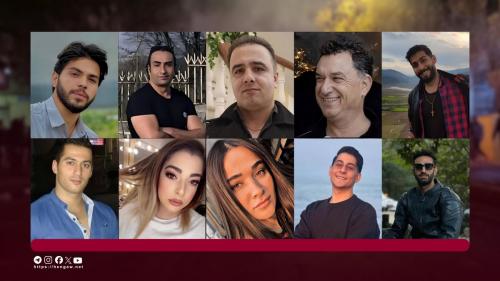
Negin Ghadimi, Parnia Shad Bejarkanari, Meysam Zarei Bejarkanari, Mehdi Saheli, Amir Heidardoost, Mehdi Ghadimi, Saeed Mirzaei, Ebrahim Ghioumi, Payam Babo Kuhestani, Abbas Khadem.
Ten Gilak individuals, including two women, were killed during popular protests in the cities of Rasht, Bandar Anzali, Rostamabad, and Manjil in Gilan Province, as well as Ramsar, Tonekabon (Shahsavar), Chalus, and Babol in Mazandaran Province.
The victims were shot dead with live ammunition by forces of the Islamic Republic of Iran.
They have been identified as Negin Ghadimi, Parnia Shad Bejarkanari, Meysam Zarei Bejarkanari, Mehdi Saheli, Amir Heidardoost, Mehdi Ghadimi, Saeed Mirzaei, Ebrahim Ghioumi, Payam Babo Kuhestani, and Abbas Khadem.
According to information received by Hengaw, Negin Ghadimi (28), from Shahsavar, was killed on January 10, 2026, during protests in the city. Informed sources stated that she died after being struck by a bullet while in her father’s arms.
On the same day, Mehdi Saheli (26), from Ramsar, was also killed after government forces opened fire during protests in one of the city’s squares. His body has not yet been handed over to his family, who are under pressure from security agencies.
Separately, Meysam Zarei Bejarkanari (39), from Rasht, was killed after being shot by government forces on January 8, 2026, during protests in the city.
Mehdi Ghadimi, a football player from Babol, was also killed by direct fire from government forces during protests in that city.
On the same day, Amir Heidardoost, from Manjil, was killed during protests after being shot by government forces.
Abbas Khadem, a sports coach from Rostamabad in Rudbar County, was killed after being shot by government forces on January 8, 2026, during protests in the city. He died after a live bullet struck his neck. Reports confirm that during protests in Rostamabad, government forces used direct gunfire and tear gas, targeting dozens of people, including women and children.
Ebrahim Ghioumi, from Bandar Anzali, was also killed on the same day after being shot by government forces during protests. Due to an internet shutdown, the exact location of his killing has not yet been confirmed; however, based on the latest information, he was killed during protests in either Rasht or Bandar Anzali.
That same day, Payam Babo Kuhestani (35), from Chalus, was killed by fire from government forces during protests in the city.
In addition, during protests in Rasht, Parnia Shad Bejarkanari (23) and Saeed Mirzaei (31)—both from Rasht—were killed after being shot directly by government forces. Parnia was originally from Rasht and had been residing in Yazd.
According to informed sources, Parnia Shad Bejarkanari’s brother was also shot in the chest during the protests and transferred to hospital.
Based on accounts received from Rasht, reports indicate that during protests in Municipality Square, government forces used sporadic gunfire to push demonstrators toward the city’s bazaar. Witnesses further report that parts of the market were set on fire while exit routes were placed under control.
According to these accounts, individuals attempting to leave the bazaar were targeted with direct gunfire.
The Hengaw Organization for Human Rights has not yet been able to independently verify or dismiss these reports due to ongoing internet disruptions.
According to these accounts, armed vehicles equipped with heavy weapons, including machine guns, were stationed around the Rasht bazaar, controlling exit routes. Several people were reportedly shot while trying to flee, after which internet access across the city was largely cut off.
According to statistics recorded by the Statistics and Documentation Center of the Hengaw Organization for Human Rights, the identities of 22 Gilak individuals who have been killed by direct fire from government forces during the recent protests have so far been verified and published by Hengaw.
https://hengaw.net/en/news/2026/01/article-113