
17 May 2026 :
May 14, 2026 - IRAN. Update on the condition of the Foreman. British nationals arrested while crossing Iran on motorbikes.
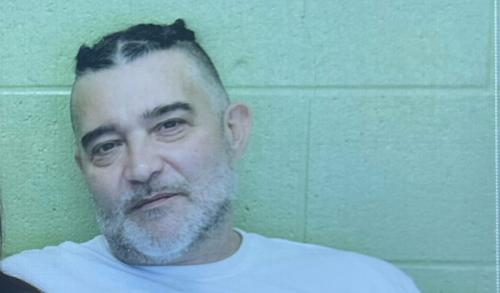
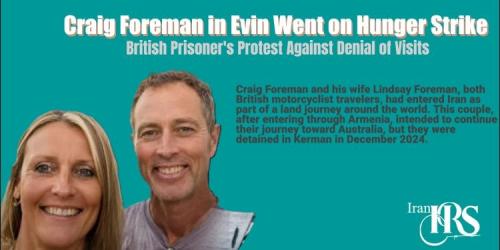
Craig Foreman, British citizen and imprisoned traveller in Evin, has entered a hunger strike in protest against denial of visits and disciplinary restrictions imposed on himself and his wife. This action took place after he referred to the difficult conditions of the people of Iran in an interview with the BBC World network. Human rights activists say the case of this British couple is another example of the instrumental use of foreign and dual-national citizens within the framework of the policy of “political hostage-taking.”
Why Did Craig Foreman Go on Hunger Strike?
Based on published reports, Craig Foreman faced disciplinary restrictions in Evin prison after conducting an interview with the BBC World network and referring to the difficult conditions of the people of Iran. It is said that prison officials have deprived him of in-person and booth visits with his wife for three weeks; an action carried out without clear explanation and without following a specified disciplinary process.
Informed sources say his hunger strike began in reaction to these restrictions and in protest against the manner of treatment toward him. Human rights activists say sudden imposition of restrictions, cutting off contact, and depriving prisoners of visits is one of the tools of psychological pressure in security prisons.
How Were Craig and Lindsay Foreman Detained?
Craig Foreman and his wife Lindsay Foreman, both British motorcyclist travelers, had entered Iran as part of a land journey around the world. This couple, after entering through Armenia, intended to continue their journey toward Australia, but they were detained in Kerman in December 2024.
The spokesperson of the Judiciary later announced that these two individuals had engaged in collecting information “under the cover of tourism activities.” On this basis, both faced the charge of “espionage” and were ultimately sentenced to ten years in prison. Human rights activists say in recent years the charge of espionage has repeatedly been raised against dual-national and foreign citizens; while many of these cases have lacked a transparent judicial process.
Hunger Strike; “The Only Power We Have”
Previously, the family of these two British prisoners had said that in a short contact with their son, Joe Bennett, they stated that “not eating food is the only power we have.” This sentence has had wide reflection in the media and, according to observers, indicates the difficult conditions of prison and the feeling of helplessness of the prisoners.
Joe Bennett has said in interviews with media: “I don’t know how long the hunger strike has lasted or how long it can continue. My mother said she is confused and has become disappointed with both the British government and Iranian officials.”
According to the family, irregular contacts, lack of information about the case process, and pressures resulting from prison have caused this couple to consider the hunger strike as the only way of their protest.
Detention of Foreign Citizens; Tool of Political Pressure?
The case of Craig and Lindsay Foreman has once again placed the issue of detention of foreign and dual-national citizens in Iran at the center of attention.
Human rights experts and political analysts say the regime has repeatedly used the detention of foreign nationals in past years for political pressure, prisoner exchange, or obtaining concessions from Western governments.
According to them, many of these detentions have been accompanied by vague security charges such as “espionage,” “cooperation with hostile governments,” or “collecting information.”
Human rights activists describe this trend as part of “hostage diplomacy”; a policy in which foreign citizens are turned into tools for political bargaining.
Evin; A Prison at the Center of Security Cases
Craig Foreman is currently being held in Evin prison; a prison that for years has been the place of detention for political, security, and dual-national prisoners. Many former Evin prisoners have spoken of psychological pressures, contact restrictions, prolonged interrogations, and deprivation of basic prisoner rights.
Human rights activists say hunger strikes in security prisons are often the last means of protest for prisoners who do not have free access to media, independent courts, or oversight institutions.
Reactions to the Case of This British Couple
The detention and conviction of Craig and Lindsay Foreman have been accompanied by reactions in international media and human rights institutions. Critics say the lack of transparency about the detention process, restrictions on access to case information, and issuance of heavy sentences have increased concerns about the situation of these two British citizens.
Also, some political observers believe that the coincidence of intensified pressure on foreign prisoners with increased regional tensions and international pressures indicates the political use of these cases.
Human Rights Violations; Deprivation of Visits and Political Use of Detentions
The case of Craig Foreman and his wife is accompanied by numerous concerns from a human rights perspective. Deprivation of visits, contact restrictions, non-transparent judicial process, and use of security charges against foreign citizens are among the cases about which human rights institutions have warned. Human rights activists say the use of detention of foreign citizens for political pressure and diplomatic bargaining violates the fundamental principles of human rights and international law.
Violated Articles:
- Violation of the right to a fair trial – Article 10 of the Universal Declaration of Human Rights: Lack of a transparent judicial process and restriction of access to case information violates the principles of fair trial.
- Violation of the right to communication with family – United Nations Minimum Rules for the Treatment of Prisoners: Long-term deprivation of prisoners from visits and contact with family violates the fundamental rights of prisoners.
- Violation of freedom of expression – Article 19 of the Universal Declaration of Human Rights: Imposition of restrictions after a media interview is considered a violation of the right to freedom of expression and opinion.
- Violation of the right to personal security – International Covenant on Civil and Political Rights: Political use of the detention of foreign and dual-national citizens threatens their personal security and fundamental rights.
For more on the Foreman case, see also HoC 16/02/2025, 18/02/2025, 10/07/2025, 05/08/2025, 11/09/2025, 14/11/2025, 20/02/2026.
https://en.iranhrs.org/craig-foreman-hunger-strike-in-evin-prison-british-couples-desperate-protest/