
31 December 2025 :
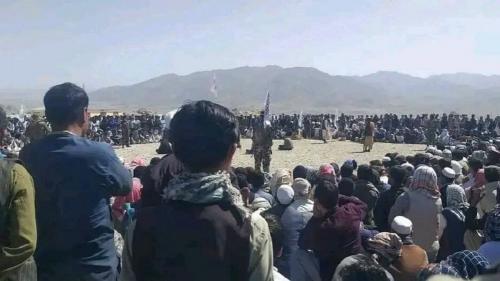
The Taliban publicly flogged more than 1,000 people across Afghanistan in 2025, including at least 150 women, according to data released by their Supreme Court, marking a sharp rise in corporal punishment during the year.
Figures compiled from official Taliban statements show that more than 1,030 people were flogged in public during 2025 for offences including running away from home, theft and acts the Taliban describe as contrary to Islamic law. Kabul recorded the highest number of cases.
The data indicate a significant increase compared with previous years, with the number of public floggings in 2025 roughly doubling earlier annual totals.
Since returning to power in August 2021, the Taliban have publicly flogged at least 1,848 people nationwide, including about 250 women, according to cumulative figures.
Corporal punishment has become a routine feature of the Taliban’s justice system, with all provinces reporting cases over the past year.
In addition to floggings, the Taliban carried out at least three public executions in 2025 in the provinces of Khost, Badghis and Paktia, drawing large crowds. In the most recent case in Khost, a man convicted of murder was executed before tens of thousands of spectators, with the sentence carried out by a 13-year-old, triggering widespread criticism.
Overall, data show that over the past four years the Taliban have issued at least 178 death sentences under the principle of retribution, known as qisas, 37 stoning sentences and four punishments involving the collapse of walls onto convicts.
At least 12 death sentences have been carried out so far.
Human rights groups say the punishments violate international law and basic human rights standards.
“The Taliban use extremist interpretations of religion to justify repression and cruelty,” said Sima Noori, a human rights activist. “Public flogging without fair trials and in the absence of a constitution is a clear violation of human rights.”
Residents interviewed in Kabul said the punishments had created a climate of fear.
“The Taliban have turned Afghanistan into a prison,” said one resident. “Men and women are flogged in front of crowds, stripping them of dignity.”
International organisations including the United Nations, Human Rights Watch and Amnesty International have repeatedly condemned corporal punishment in Afghanistan and called for it to stop.
Earlier this year, the International Criminal Court issued arrest warrants for the Taliban’s leader and the head of its Supreme Court on charges including crimes against humanity and gender-based persecution.
The Taliban have rejected international criticism and say they are enforcing what they describe as Islamic law.