
16 April 2026 :
A group of United Nations human rights experts has called on the Taliban to rescind a sweeping decree governing criminal court procedures, warning that it could further erode fundamental rights and legal protections in Afghanistan.
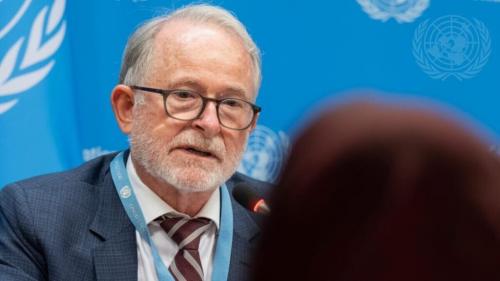
In a formal communication dated April 10, 2026, led by Richard Bennett, the UN special rapporteur for Afghanistan, the experts said their analysis of the Taliban’s Decree No. 12 — described as “criminal rules of courts” — raises “significant concerns” about its compatibility with international human rights law.
The letter, addressed to Amir Khan Muttaqi, the Taliban’s foreign minister, argues that the decree risks institutionalizing practices that violate rights to fair trial, equality before the law and protection from torture, among others.
The decree, which took effect in January, appears to lack transparency in its drafting process and does not reference Afghanistan’s previous constitution or established legislative procedures, the experts said.
Among the most serious concerns cited is the absence of basic due process guarantees. The experts noted that the rules do not clearly provide for the presumption of innocence, the right to legal defense, or meaningful access to appeals — safeguards considered central to fair trial standards under international law.
They also warned that vaguely defined offenses and broad judicial discretion could enable arbitrary enforcement, including targeting of civil society actors, minorities and other vulnerable groups.
The decree appears to codify unequal treatment before the law by introducing a social hierarchy that could influence punishment, the experts said, raising concerns about discrimination based on status and potentially gender.
Other provisions highlighted in the analysis include the authorization of corporal punishment such as lashings, which the experts said violates the international prohibition on torture and cruel, inhuman or degrading treatment.
The letter also expressed alarm over provisions allowing private individuals, including family members, to administer punishments in certain cases, potentially without judicial oversight.
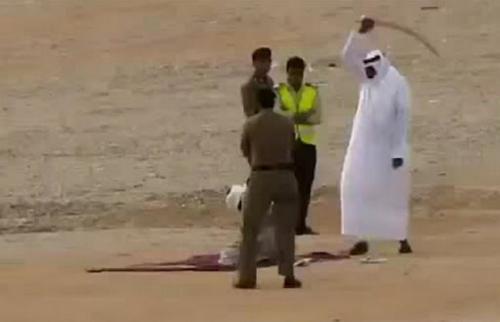
In addition, the experts raised concerns about the expanded use of the death penalty, including for offenses that do not meet the threshold of “most serious crimes” under international law, and in circumstances that may lack fair trial guarantees.
The decree’s provisions affecting women and girls drew particular scrutiny. The experts said some articles appear to permit domestic violence under limited conditions and impose restrictions on women’s movement and autonomy, while failing to adequately criminalize abuse.
They also cited provisions that could discriminate against religious minorities and restrict freedom of belief, as well as rules criminalizing certain forms of expression and association.
The experts requested clarification from Taliban on a wide range of issues, including safeguards for due process, protections for vulnerable groups, and the legal basis for several provisions.
They said they stand ready to provide technical advice but would continue to monitor implementation of the decree and its impact on human rights in Afghanistan.
Taliban have not publicly responded to the communication.