
26 February 2026 :
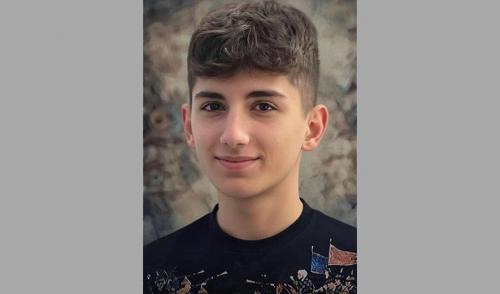
February 26, 2026 - IRAN. Victim Accounts: 16-Year-Old Amir Ali Ghanbarzadeh Shot Dead Minutes After Joining Protest
Amir Ali Ghanbarzadeh, a 16-year-old teenager, was shot and killed by security forces during the January 2026 anti-government protests in Garmdareh, Karaj. A source close to his family has provided IHR with details about the circumstances of his killing.
Amir Ali Ghanbarzadeh was a student who lived with his family in Ariashahr, Tehran.
The source told IHRNGO: “On 8 January, Amir Ali went to Garmdareh, where his father worked. As anti-government protests spread across different cities, many areas of Karaj, including Garmdareh, were filled with protesters. Amir Ali insisted on taking part in the demonstrations. In response to his family’s concerns, he said: ‘We must stand against this injustice and take back our rights’.”
The informed source continued: “On the night of 8 January, with his family’s consent, Amir Ali went into the streets. Less than ten minutes later, in front of his mother’s eyes, he was targeted with live ammunition by plainclothes and Basij forces (paramilitary branch of IRGC) and fell to the ground. Several protesters who were in the front lines alongside him were also wounded or killed.”
According to the source, Amir Ali’s mother immediately held him in her arms. “His face had been struck by three small-calibre live bullets and was covered in blood, but he was still alive. Two bullets had hit his skull and one his jaw.”
The source added that Amir Ali’s mother, with the help of bystanders, transported him in a passing vehicle to Imam Ali Hospital in Karaj. “The hospital was extremely crowded. People were bringing in the wounded and the dead. Most had been shot in the head or the heart. Amir Ali was still alive until around 2:30 a.m., but after that doctors declared him dead and told the family there was nothing more they could do.”
The source further stated: “The following day (9 January), the family went to the Legal Medicine Organisation at Behesht-e Sakineh cemetery in Karaj to collect Amir Ali’s body. There were so many bodies that some had been placed in the corridors. Due to a shortage of body bags, several of the victims had been placed in transparent plastic coverings.”
The source continued: “A forensic doctor gave Amir Ali’s family a number. Because of the high number of victims and the severe damage to his face, his parents struggled to identify him and ultimately recognised him by his clothes. Amir Ali’s number was 237, and many more bodies were registered after him.”
According to the source, at the time of releasing Amir Ali’s body, security forces pressured family members and gave his father a form requiring him to declare either that Amir Ali had been a Basiji who had been ‘martyred,’ or that he had died after falling from a rooftop. “The family refused to state that their son had been a Basiji and accepted the second condition. They were also told that the burial must be held with only a limited number of close relatives present and that they were not allowed to post Instagram stories or share information online.”
“Security forces showed the family a list and said, ‘We have arrested these terrorist individuals. If you file a complaint against one of them, we will pursue your case.’ The family again refused.”
At the family’s request, Amir Ali’s body was transferred to Behesht-e Zahra cemetery on 12 January and buried in the presence of a limited number of close relatives. The family were not permitted to hold a memorial ceremony at a mosque.
According to the source, several days later security forces visited the Ghanbarzadeh family and told them that if they agreed to have Amir Ali officially recognised as a martyr, they would be referred to the Foundation of Martyrs and Veterans Affairs and receive financial support. The family once again rejected the offer.
Finally, the source said: “Amir Ali was a very lively and energetic young man. He loved basketball and gymnastics. He was the eldest child in the family and had a three-year-old sister who still waits each day for the brother who will never return home.”
https://iranhr.net/en/articles/8641/